
Contact Dermatitis Treatment in Clovis & Fresno, CA
Contact dermatitis is one of the most common inflammatory skin conditions — and one of the most underdiagnosed, because identifying the specific trigger requires expertise that goes beyond general skin care. At Dehesa Dermatology, board-certified dermatologist Dr. Luis A. Dehesa evaluates and treats both irritant and allergic contact dermatitis, offering comprehensive patch testing to pinpoint your specific triggers and personalized treatment to restore your skin’s health. Serving patients throughout Clovis, Fresno, and the Central Valley.
What Is Contact Dermatitis?
Contact dermatitis is an inflammatory skin reaction that occurs when the skin comes into direct contact with a substance that either irritates it or triggers an allergic immune response. It is the most common occupational skin disease in the United States and a significant source of chronic discomfort for people in a wide range of industries — from healthcare and agriculture to construction and cosmetology. In the Central Valley, where agriculture is the dominant industry, contact dermatitis from pesticides, fertilizers, plant resins, and other occupational exposures is particularly prevalent.
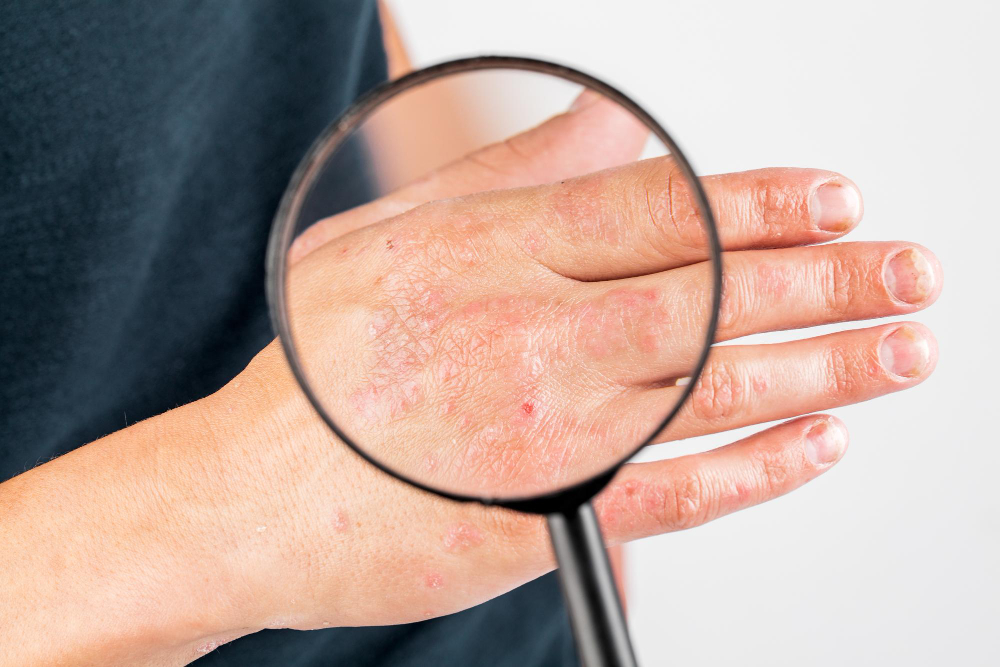
Contact dermatitis presents as a red, itchy rash — sometimes with blistering, weeping, or crusting — confined to the area of skin that came into contact with the triggering substance. The distribution of the rash is often the most important diagnostic clue: a linear streak suggests plant contact, a rash confined to areas under jewelry suggests metal allergy, and a rash on the hands that spares covered areas suggests occupational exposure.
Types of Contact Dermatitis
- Irritant Contact Dermatitis (ICD): The most common form, accounting for approximately 80% of contact dermatitis cases. Caused by direct chemical or physical damage to the skin barrier — not an immune reaction. Common causes include frequent hand washing, harsh soaps and detergents, solvents, acids, alkalis, and prolonged wet work. Anyone can develop ICD with sufficient exposure; no prior sensitization is required.
- Allergic Contact Dermatitis (ACD): A delayed hypersensitivity immune reaction that occurs in individuals who have been previously sensitized to a specific allergen. Common allergens include nickel (in jewelry and belt buckles), fragrance (in perfumes, personal care products, and cleaning agents), preservatives (methylisothiazolinone, formaldehyde-releasers), rubber chemicals, hair dye ingredients (PPD), poison oak and poison ivy (urushiol), neomycin (antibiotic in over-the-counter ointments), and epoxy resins.
Patch Testing — Identifying Your Allergens
Patch testing is the definitive diagnostic test for allergic contact dermatitis and is performed at Dehesa Dermatology when an allergic contact trigger is suspected. During patch testing, small amounts of standardized allergens are applied to your back on patches that remain in place for 48 hours. The patches are then removed and readings are taken at 48 and 96 hours to identify which substances produce a positive allergic reaction. Results guide targeted allergen avoidance — which is the cornerstone of ACD management.
Patch testing is distinct from prick testing used for environmental allergies — it specifically identifies delayed skin contact allergies and requires dermatology expertise for accurate interpretation.
Treatment of Contact Dermatitis
- Allergen and Irritant Avoidance: The single most effective intervention — once the trigger is identified, removing it from your environment dramatically reduces or eliminates symptoms.
- Topical Corticosteroids: Prescription-strength corticosteroid creams and ointments to rapidly reduce inflammation and itching during flares.
- Topical Calcineurin Inhibitors: Non-steroidal alternatives (tacrolimus, pimecrolimus) for sensitive areas or long-term maintenance.
- Oral Corticosteroids: Short courses for severe or widespread reactions requiring rapid systemic anti-inflammatory treatment.
- Barrier Repair and Moisturization: Restoring the skin barrier with appropriate emollients is essential for both irritant and allergic contact dermatitis recovery.
- Avoidance Guidance and Product Recommendations: Detailed lists of safe products and allergen cross-reactors based on your specific patch test results.
Frequently Asked Questions About Contact Dermatitis
How do I know if my rash is contact dermatitis or eczema?
Both conditions can look very similar — both cause red, itchy, inflamed skin. The key distinction is that contact dermatitis is triggered by an external substance and typically clears (or significantly improves) when that substance is avoided, while eczema (atopic dermatitis) is a chronic intrinsic condition driven by a combination of genetic and immune factors that persists regardless of external exposures. In practice, many patients have both — atopic dermatitis that is worsened by contact allergens. Patch testing at Dehesa Dermatology can help identify whether a contact allergy is contributing to your skin symptoms. Learn more on our eczema page.
What are the most common contact allergens?
The most common contact allergens identified on patch testing include nickel (in cheap jewelry, belt buckles, and phone cases), fragrance mix (in perfumes, skincare products, and cleaning agents), preservatives such as methylisothiazolinone and formaldehyde-releasers (in cosmetics and household products), rubber accelerators (in gloves), para-phenylenediamine or PPD (in hair dye), neomycin (in over-the-counter antibiotic ointments like Neosporin), and urushiol (in poison oak and poison ivy). Our patch testing panel screens for all of these and more.
Can I develop an allergy to something I’ve used for years without a problem?
Yes — and this surprises many patients. Allergic contact dermatitis requires prior sensitization, which can take months to years of repeated exposure before the immune system mounts a reaction. It is entirely possible to use a product for years and then suddenly develop an allergy to one of its ingredients. Once sensitized, even small amounts of the allergen can trigger a reaction.
How long does contact dermatitis last after removing the trigger?
After successful identification and complete avoidance of the causative allergen or irritant, most contact dermatitis rashes improve significantly within 1 to 3 weeks. Treatment with topical corticosteroids accelerates resolution. Some reactions — particularly those involving strong sensitizers or prolonged exposure — may take longer to fully resolve. Incomplete clearance often indicates ongoing exposure to the trigger or a missed secondary allergen.
Is poison oak common in the Fresno and Clovis area?
Yes. Poison oak (Toxicodendron diversilobum) grows throughout the Sierra Nevada foothills — in the same areas popular with hikers, campers, and outdoor recreationalists from the Clovis-Fresno area. Contact with its leaves, stems, or roots causes severe allergic contact dermatitis in sensitized individuals. Reactions typically develop 24 to 72 hours after contact and can range from localized red streaky rashes to severe, blistering reactions requiring systemic steroid treatment. If you’ve been exposed and develop a significant reaction, contact Dehesa Dermatology at (559) 951-9000 for prompt evaluation and treatment.
Does occupational contact dermatitis qualify for workers’ compensation?
Occupational contact dermatitis — including irritant contact dermatitis from prolonged wet work or chemical exposure and allergic contact dermatitis from workplace allergens — can qualify for workers’ compensation in California. Accurate diagnosis and documentation by a board-certified dermatologist, including patch testing results, are essential for occupational dermatitis claims. Dr. Dehesa can provide thorough clinical documentation of your diagnosis and findings.
Does Dehesa Dermatology perform patch testing for patients from Fresno?
Yes. Patch testing for allergic contact dermatitis is available at Dehesa Dermatology for patients from Fresno, Clovis, and throughout the Central Valley. Our office is at 978 N Temperance Ave in Clovis, accessible from Fresno via Highway 168. Call (559) 951-9000 to schedule your patch test evaluation.