
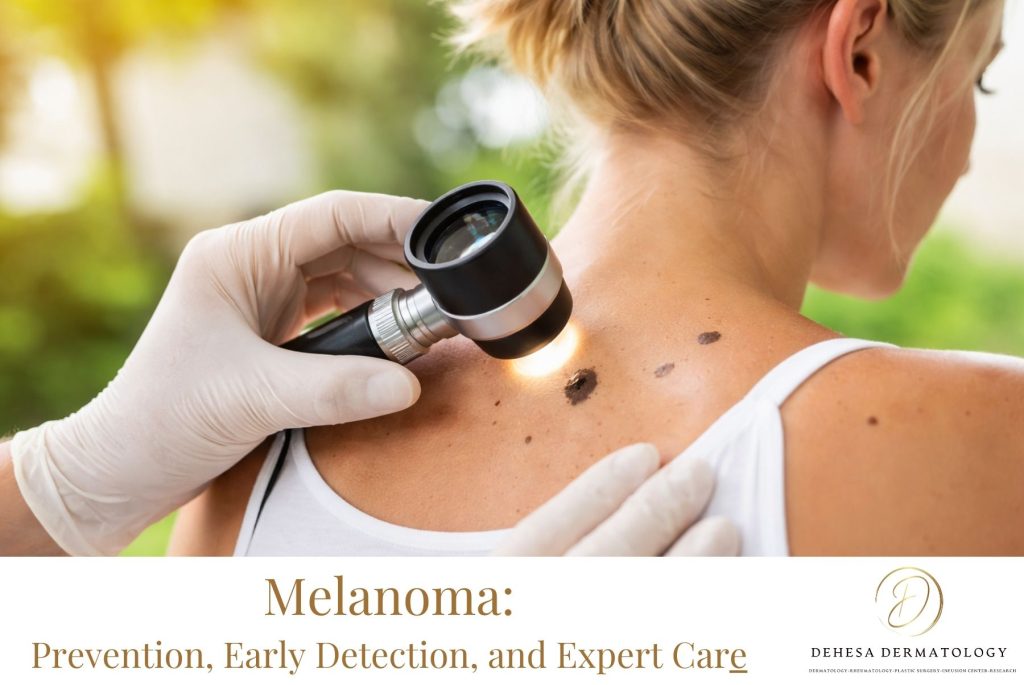
Melanoma is one of the most serious forms of skin cancer—but when detected early, it is highly treatable. At Dehesa Dermatology, we are committed to educating our community about melanoma, helping patients recognize warning signs, and providing advanced, compassionate care in Clovis, CA.
In this comprehensive guide, we’ll explain what melanoma is, who is at risk, how to detect it early, and what treatment options are available.
What Is Melanoma?
Melanoma is a type of skin cancer that develops in melanocytes—the cells responsible for producing melanin, the pigment that gives skin its color. Although melanoma accounts for a smaller percentage of skin cancer cases compared to basal cell and squamous cell carcinoma, it is more likely to spread (metastasize) if not caught early.
Melanoma can develop anywhere on the body, including areas not commonly exposed to the sun. In men, it often appears on the trunk, while in women it is frequently found on the legs. It can also develop under nails, on the scalp, and even in the eyes.
What Causes Melanoma?
The primary risk factor for melanoma is ultraviolet (UV) radiation exposure from the sun or tanning beds. However, melanoma is often caused by a combination of environmental and genetic factors.
Major Risk Factors Include:
- Excessive sun exposure
- History of sunburns, especially blistering sunburns
- Use of tanning beds
- Fair skin, light hair, and light eyes
- A large number of moles or atypical moles
- Family history of melanoma
- Weakened immune system
- Personal history of skin cancer
Even individuals with darker skin tones can develop melanoma, particularly in less pigmented areas such as the palms, soles, and nail beds.
How to Detect Melanoma Early
Early detection is critical. When caught in its earliest stages, melanoma has a very high survival rate.
The ABCDE Rule
Use the ABCDE rule to evaluate moles or skin lesions:
- A – Asymmetry: One half doesn’t match the other.
- B – Border: Irregular, scalloped, or poorly defined edges.
- C – Color: Multiple colors or uneven pigmentation.
- D – Diameter: Larger than 6mm (about the size of a pencil eraser), although melanomas can be smaller.
- E – Evolving: Changes in size, shape, color, or symptoms such as itching or bleeding.
If you notice any of these signs, schedule a professional skin evaluation promptly.
The Importance of Annual Skin Exams
Routine full-body skin exams performed by a board-certified dermatologist are one of the most effective tools in preventing advanced melanoma. At Dehesa Dermatology, we carefully examine the skin from head to toe, documenting and monitoring any suspicious lesions.
Patients with higher risk factors may benefit from more frequent evaluations and mole mapping technology.
Melanoma Treatment Options
Treatment depends on the stage and depth of the melanoma.
Early-Stage Melanoma
- Surgical excision to remove the cancerous tissue
- Typically highly successful when detected early
Advanced Melanoma
If melanoma has spread, additional treatments may include:
- Sentinel lymph node biopsy
- Immunotherapy
- Targeted therapy
- Radiation therapy
- Chemotherapy (less common today)
Our team at Dehesa Dermatology works closely with oncology specialists when advanced treatment is needed to ensure coordinated, comprehensive care.
How to Prevent Melanoma
Prevention starts with protecting your skin:
- Wear broad-spectrum sunscreen (SPF 30 or higher) daily
- Reapply sunscreen every two hours outdoors
- Wear protective clothing, hats, and sunglasses
- Avoid tanning beds
- Seek shade during peak sun hours (10 AM–4 PM)
- Perform monthly self-skin checks
Consistency is key. Sun protection is not just for beach days—it’s an everyday habit.
Frequently Asked Questions (Q&A)
Q: Is melanoma always caused by sun exposure?
Not always. While UV exposure is the leading cause, melanoma can also develop due to genetic factors or in areas rarely exposed to sunlight.
Q: Can melanoma develop from an existing mole?
Yes. Melanoma can arise from an existing mole or appear as a new dark spot on the skin.
Q: How quickly does melanoma spread?
Melanoma can grow and spread more rapidly than other types of skin cancer. This is why early detection is critical.
Q: Is melanoma curable?
When caught early, melanoma is highly treatable and often curable with surgical removal. Advanced melanoma can still be treated effectively with modern therapies.
Q: Are people with darker skin at risk?
Yes. While the risk is lower, melanoma can still occur in individuals with darker skin tones—often in less pigmented areas.
Q: What age group is most affected?
Melanoma can affect people of all ages and is one of the most common cancers in young adults, especially young women.
Q: Does sunscreen completely prevent melanoma?
Sunscreen significantly reduces risk but does not eliminate it entirely. Regular skin exams and self-checks remain essential.
Q: What should I do if I notice a suspicious mole?
Schedule an appointment immediately with a dermatologist for evaluation. Early assessment can make a life-saving difference.
Why Choose Dehesa Dermatology?
At Dehesa Dermatology, we combine advanced diagnostic technology with compassionate patient care. Our goal is early detection, effective treatment, and empowering our patients with the knowledge they need to protect their skin for life.
If you have concerns about a mole or would like to schedule a full-body skin exam, we are here to help.
Contact Information
Dehesa Dermatology
978 N Temperance Ave
Clovis, CA 93611
📞 Phone: (559) 951-9000
🌐 Website: dehesadermatology.com


