
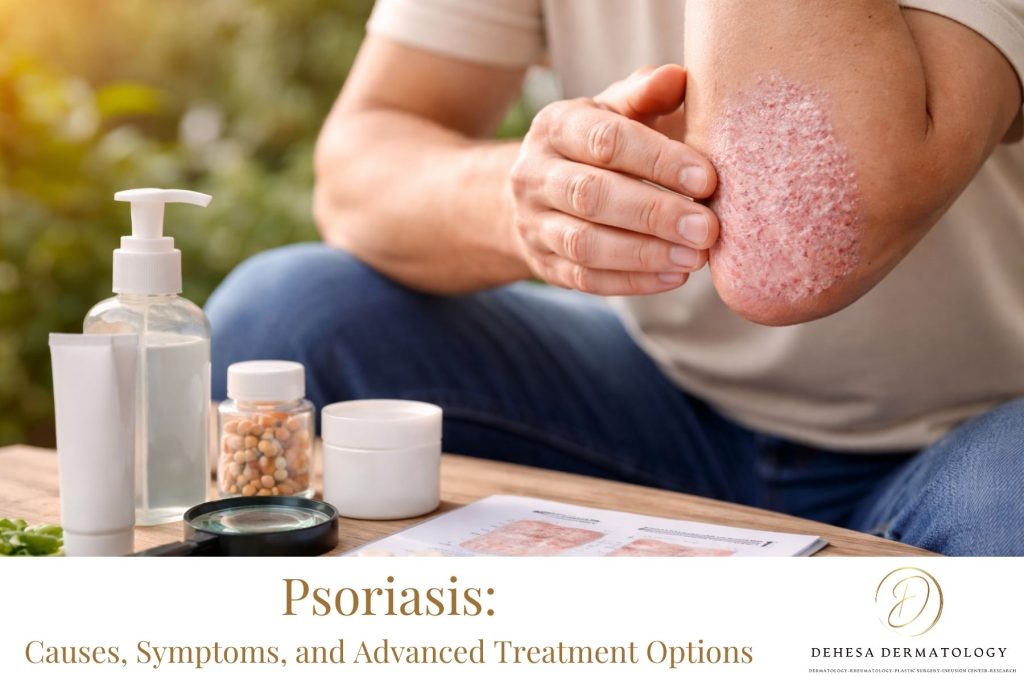
Psoriasis is more than just a skin condition—it’s a chronic autoimmune disease that can significantly impact your physical comfort, emotional well-being, and overall quality of life. At Dehesa Dermatology, we are committed to providing expert diagnosis, personalized treatment plans, and compassionate care to help patients effectively manage psoriasis and regain confidence in their skin.
If you or a loved one is struggling with psoriasis, understanding the condition is the first step toward relief and long-term control.
What Is Psoriasis?
Psoriasis is a chronic autoimmune condition that causes the skin to produce new cells too quickly. Normally, skin cells grow and shed over the course of about a month. In individuals with psoriasis, this process happens in just a few days. The result is a buildup of skin cells that form thick, scaly patches on the surface of the skin.
These patches—often called plaques—can be itchy, painful, inflamed, and sometimes cracked or bleeding. Psoriasis is not contagious, but it can be persistent and may flare up periodically.
Common Types of Psoriasis
There are several forms of psoriasis, each with distinct characteristics:
1. Plaque Psoriasis
The most common type, characterized by raised, red patches covered with silvery-white scales. These typically appear on the elbows, knees, scalp, and lower back.
2. Guttate Psoriasis
Often triggered by infections such as strep throat, this type appears as small, drop-shaped spots on the trunk and limbs.
3. Inverse Psoriasis
Develops in skin folds (such as under the breasts, in the groin, or under the arms) and appears as smooth, red lesions.
4. Pustular Psoriasis
Characterized by white pustules (blisters of noninfectious pus) surrounded by red skin.
5. Erythrodermic Psoriasis
A rare but severe form that can cause widespread redness, peeling skin, and systemic symptoms. This requires immediate medical attention.
What Causes Psoriasis?
Psoriasis is an autoimmune condition, meaning the immune system mistakenly attacks healthy skin cells. While the exact cause is not fully understood, several factors contribute:
- Genetics: Family history increases risk.
- Immune system dysfunction
- Triggers, including:
- Stress
- Skin injuries
- Infections
- Cold weather
- Certain medications
- Smoking and alcohol use
- Stress
Identifying and managing triggers is an important part of treatment.
Symptoms of Psoriasis
Symptoms can vary depending on the type and severity but may include:
- Red, inflamed patches of skin
- Silvery-white scales
- Dry, cracked skin that may bleed
- Itching, burning, or soreness
- Thickened or ridged nails
- Joint pain and stiffness (psoriatic arthritis)
Because psoriasis can affect more than just the skin, early evaluation by a dermatology specialist is essential.
Psoriasis and Psoriatic Arthritis
Up to 30% of people with psoriasis may develop psoriatic arthritis, a condition that causes joint pain, stiffness, and swelling. Early diagnosis is critical to prevent long-term joint damage. If you are experiencing joint symptoms along with skin changes, Dehesa Dermatology is the right place for you, as we have a board-certified dermatologist and a board certified rheumatologist working side by side under the same roof.
How Is Psoriasis Diagnosed?
Psoriasis is typically diagnosed through:
- A detailed medical history
- A thorough skin examination
- In rare cases, a skin biopsy
At Dehesa Dermatology, we take a comprehensive approach to ensure an accurate diagnosis and rule out other skin conditions.
Advanced Treatment Options for Psoriasis
While there is currently no cure for psoriasis, effective treatments are available to control symptoms and reduce flare-ups. Treatment plans are tailored based on severity, type, overall health, and patient preferences.
1. Topical Treatments
- Corticosteroids
- Vitamin D analogs
- Retinoids
- Moisturizers and medicated creams
Often used for mild to moderate psoriasis.
2. Phototherapy
Controlled exposure to ultraviolet light can slow skin cell turnover and reduce inflammation.
3. Systemic Medications
Oral or injectable medications that work throughout the body to regulate immune system activity.
4. Biologic Therapies
Targeted treatments that block specific immune pathways responsible for psoriasis inflammation. These are often highly effective for moderate to severe cases.
Our dermatology team stays current with the latest advancements in psoriasis management to provide safe, evidence-based care.
Lifestyle Tips for Managing Psoriasis
In addition to medical treatment, lifestyle adjustments can help minimize flare-ups:
- Keep skin well moisturized
- Avoid known triggers
- Manage stress through relaxation techniques
- Maintain a healthy weight
- Avoid smoking
- Limit alcohol intake
Consistent follow-up care is essential to monitor progress and adjust treatment as needed.
Comprehensive Psoriasis Q&A
Q: Is psoriasis contagious?
A: No. Psoriasis is an autoimmune condition and cannot be spread through physical contact.
Q: What triggers psoriasis flare-ups?
A: Common triggers include stress, infections, skin injuries, cold weather, smoking, and certain medications.
Q: Can psoriasis go away on its own?
A: Psoriasis is chronic and does not typically go away permanently. However, symptoms may improve or go into remission with treatment.
Q: Is psoriasis just a skin condition?
A: No. Psoriasis is a systemic autoimmune disease and can affect joints (psoriatic arthritis) and may be associated with other health conditions such as cardiovascular disease.
Q: Can children develop psoriasis?
A: Yes. Psoriasis can occur at any age, including childhood.
Q: How do I know if I have psoriasis or eczema?
A: While both cause red, irritated skin, psoriasis plaques are usually thicker and covered with silvery scales. A dermatology evaluation is the best way to determine the correct diagnosis.
Q: Are biologic treatments safe?
A: Biologics are FDA-approved and have been extensively studied. Your dermatologist will determine if you are a candidate and monitor you closely during treatment.
Q: Does diet affect psoriasis?
A: While no specific diet cures psoriasis, maintaining a healthy weight and reducing inflammatory foods may help reduce flare-ups.
Q: Can stress make psoriasis worse?
A: Yes. Stress is a well-known trigger and can worsen existing symptoms.
Q: When should I see a dermatologist?
A: If you have persistent red, scaly patches, joint pain, or symptoms that interfere with your daily life, it’s important to schedule an evaluation.
Compassionate Psoriasis Care in Clovis, CA
Living with psoriasis can be physically and emotionally challenging—but you don’t have to manage it alone. At Dehesa Dermatology, we provide comprehensive, patient-centered care designed to reduce symptoms, prevent flare-ups, and improve your overall quality of life.
If you are experiencing symptoms of psoriasis or need help managing an existing diagnosis, we invite you to schedule a consultation.
Contact Information
Dehesa Dermatology
978 N Temperance Ave
Clovis, CA 93611
Phone: (559) 951-9000
Website: dehesadermatology.com


