
By Dehesa Dermatology – Clovis, CA
Skin cancer is the most common form of cancer in the United States, but it’s also one of the most preventable and treatable when caught early. At Dehesa Dermatology, we are committed to helping patients in Clovis and the surrounding Central Valley protect their skin health through comprehensive skin cancer screenings, education, and advanced dermatologic care.
Whether you’ve noticed a new or changing mole, have a history of sun exposure, or simply want peace of mind, routine skin cancer screenings can be lifesaving.
Why Skin Cancer Screening Is So Important
Skin cancer can develop silently and may not cause pain or noticeable symptoms in its early stages. A professional skin exam allows a trained dermatology provider to identify suspicious lesions long before they become dangerous.
There are three primary types of skin cancer:
1. Basal Cell Carcinoma (BCC)
- The most common type of skin cancer
- Often appears as a pearly or flesh-colored bump
- Rarely spreads but can cause significant tissue damage if untreated
2. Squamous Cell Carcinoma (SCC)
- May appear as a scaly red patch or firm bump
- Can grow deeper into the skin and potentially spread
3. Melanoma
- The most serious type of skin cancer
- Can develop within an existing mole or appear as a new dark spot
- More likely to spread if not caught early
Early detection dramatically increases successful treatment outcomes—especially for melanoma.
What to Expect During a Skin Cancer Screening
At Dehesa Dermatology, we provide thorough, professional skin evaluations in a comfortable and respectful environment.
During your screening:
- A provider will examine your skin from head to toe.
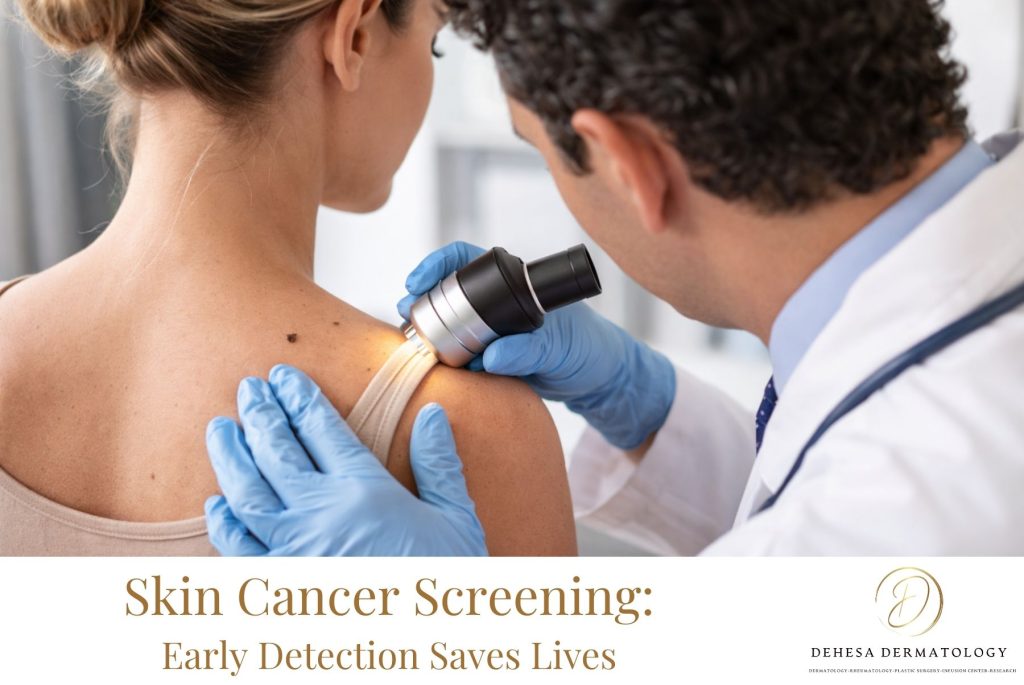
- Suspicious moles or lesions will be evaluated using clinical expertise and dermatoscopic tools.
- If necessary, a biopsy may be recommended to determine whether a lesion is cancerous.
- You’ll receive education on how to monitor your skin at home.
The exam is quick, non-invasive, and typically takes about 15–20 minutes.
Who Should Get Screened?
Everyone can benefit from periodic skin exams, but you may be at higher risk if you:
- Have fair skin, light eyes, or blonde/red hair
- Have a history of blistering sunburns
- Spend significant time outdoors
- Use tanning beds
- Have many moles or atypical moles
- Have a personal or family history of skin cancer
- Are over the age of 40
If you fall into one or more of these categories, annual screenings are especially important.
The ABCDEs of Melanoma: What to Watch For
Between visits, monitor your skin using the ABCDE rule:
- A – Asymmetry: One half doesn’t match the other.
- B – Border: Edges are irregular or blurred.
- C – Color: Multiple shades or uneven color.
- D – Diameter: Larger than 6mm (about a pencil eraser).
- E – Evolving: Changes in size, shape, or color.
If you notice any of these warning signs, schedule an appointment promptly.
Prevention Tips for Healthy Skin
While screenings are essential, prevention is equally important:
- Apply broad-spectrum sunscreen (SPF 30 or higher) daily.
- Reapply sunscreen every two hours outdoors.
- Wear protective clothing, hats, and sunglasses.
- Avoid peak sun hours (10 a.m. to 4 p.m.).
- Skip tanning beds entirely.
Sun damage accumulates over time, so consistent protection is key.
Comprehensive Skin Cancer Screening Q&A
Q: How often should I get a skin cancer screening?
A: Most adults benefit from annual skin exams. However, individuals at higher risk may need more frequent screenings based on your provider’s recommendation.
Q: Is a skin cancer screening painful?
A: No. A screening is a visual exam of your skin. If a biopsy is needed, local anesthesia is used to ensure comfort.
Q: Do I need a referral?
A: Many patients can schedule directly. Contact our office to verify your insurance requirements.
Q: What should I wear to my appointment?
A: Wear comfortable clothing that is easy to remove. You will be provided with appropriate draping during the exam.
Q: What happens if something suspicious is found?
A: Your provider may recommend a biopsy. If skin cancer is diagnosed, we will discuss personalized treatment options and next steps.
Q: Are skin cancer screenings covered by insurance?
A: Many insurance plans cover preventive skin exams, but coverage varies. Our team can help verify your benefits.
Q: Can children get skin cancer?
A: While less common, children and teens can develop skin cancer. Sun protection from a young age is essential.
Q: I don’t have any suspicious moles. Do I still need a screening?
A: Yes. Some skin cancers develop in areas you may not easily see, such as your scalp, back, or behind your ears.
Q: How long does it take to get biopsy results?
A: Most biopsy results are available within one to two weeks.
Q: Does darker skin eliminate the risk of skin cancer?
A: No. While individuals with darker skin have a lower risk, skin cancer can still occur and may be diagnosed at later stages if not monitored.
Trust Your Skin to Local Experts
At Dehesa Dermatology, we are dedicated to providing compassionate, high-quality dermatologic care to the Clovis/ Central Valley community. Early detection is the best defense against skin cancer, and routine screenings are a simple step that can make a life-changing difference.
If it’s been a year (or longer) since your last skin check—or if you’ve noticed a concerning change—now is the time to schedule an appointment.
Contact Dehesa Dermatology
Dehesa Dermatology
978 N Temperance Ave
Clovis, CA 93611
Phone: (559) 951-9000
Website: www.dehesadermatology.com


