
Psoriasis Treatment in Clovis & Fresno, CA
Psoriasis is a chronic autoimmune skin disease that affects more than 8 million Americans — and for many, it significantly impacts quality of life through persistent itching, visible plaques, joint pain, and the emotional burden of a condition that never fully goes away. At Dehesa Dermatology, board-certified dermatologist Dr. Luis A. Dehesa specializes in the full spectrum of psoriasis management, from mild topical cases to the most severe forms requiring biologic and infusion-based therapies. Serving patients throughout Clovis, Fresno, and the Central Valley, we offer a level of psoriasis expertise rarely found outside of academic medical centers.
What Is Psoriasis?
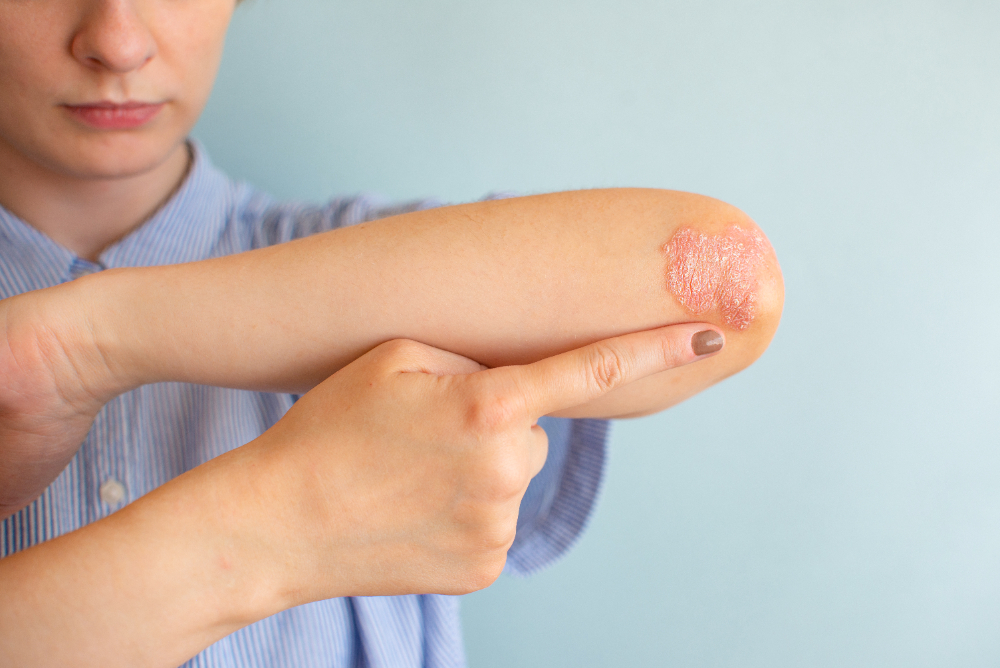
Psoriasis is a systemic autoimmune condition in which the immune system, particularly T-cells, becomes overactivated and mistakenly accelerates the life cycle of skin cells. Normally, skin cells grow and shed over approximately one month. In psoriasis, this process takes just 3 to 4 days — causing a rapid buildup of immature skin cells on the surface that form the characteristic thick, silvery-white scales over red, inflamed patches known as plaques.
Psoriasis is not contagious. It cannot be spread through touch, shared surfaces, or any form of contact. It is a genetically influenced condition, meaning it runs in families, though having a family member with psoriasis does not guarantee you will develop it. Environmental triggers — including stress, infections (particularly streptococcal throat infections), certain medications, skin injury, alcohol, and smoking — can initiate or worsen psoriasis in genetically predisposed individuals.
Psoriasis is also associated with systemic inflammation that extends beyond the skin. Patients with psoriasis have elevated risks of psoriatic arthritis, cardiovascular disease, metabolic syndrome, depression, and inflammatory bowel disease. This systemic dimension of psoriasis is one of the reasons why specialist care — and particularly access to our on-site rheumatology team — is so valuable for our patients at Dehesa Dermatology.
Types of Psoriasis
Psoriasis presents in several distinct clinical forms, each requiring individualized treatment approaches:
- Plaque Psoriasis (Psoriasis Vulgaris): The most common form, affecting approximately 80 to 90% of psoriasis patients. Characterized by well-defined, raised, red plaques covered with thick, silvery scales. Most commonly appears on the elbows, knees, lower back, and scalp.
- Guttate Psoriasis: Small, drop-shaped red spots that erupt suddenly across the trunk, arms, and legs — often triggered by a streptococcal infection. More common in children and young adults.
- Inverse Psoriasis: Smooth, red, inflamed patches in skin folds such as the armpits, groin, under the breasts, and around the genitals. The friction and moisture in these areas make management particularly challenging.
- Pustular Psoriasis: White pustules (blisters of non-infectious pus) surrounded by red skin. Can be localized (palms and soles) or generalized — the generalized form is a medical emergency requiring prompt treatment.
- Erythrodermic Psoriasis: A severe, potentially life-threatening form in which a fiery redness covers nearly the entire body. Requires immediate medical attention and often hospitalization.
- Psoriatic Arthritis: Joint inflammation that occurs in an estimated 30% of people with psoriasis. Can cause significant joint damage if untreated. Our integrated care model at Dehesa Dermatology — combining dermatology and our on-site rheumatology department — is uniquely suited to managing both the skin and joint components of this condition simultaneously.
Psoriasis Treatment Options at Dehesa Dermatology
Psoriasis treatment has advanced dramatically in recent decades, and today there are more effective, better-tolerated options than ever before. At Dehesa Dermatology, we match treatment intensity and approach to the severity of your psoriasis and your individual goals and preferences:
- Topical Therapies: The foundation of mild to moderate psoriasis treatment. Options include prescription-strength corticosteroids, vitamin D analogues (calcipotriene), retinoids (tazarotene), coal tar preparations, salicylic acid, and combination products such as Taclonex. We provide detailed guidance on rotation strategies to maintain effectiveness while minimizing side effects.
- Phototherapy (Narrowband UVB): Controlled exposure to a specific wavelength of UV light that slows skin cell proliferation. A well-established, safe option for moderate to severe psoriasis, particularly widespread disease not well-controlled with topicals alone. Typically administered 2 to 3 times per week over several months.
- Systemic Medications: Oral agents including methotrexate, cyclosporine, and acitretin for moderate to severe psoriasis. Each requires monitoring for potential side effects, which our team manages carefully with regular lab testing and follow-up.
- Biologic Therapies: Injectable or infusible targeted medications that block specific immune pathways responsible for psoriasis. Biologics represent a revolution in psoriasis care — many patients who failed previous treatments achieve clear or almost-clear skin with biologics. We prescribe and manage the major biologic classes including TNF inhibitors, IL-17 inhibitors, and IL-23 inhibitors, and assist patients with insurance prior authorization.
- Infusion Therapy: Certain biologic medications including infliximab (Remicade) are administered intravenously. Our on-site infusion therapy center provides this capability at Dehesa Dermatology, allowing patients to receive IV biologic therapy without leaving our practice.
- JAK Inhibitors: Newer oral targeted therapies approved for moderate to severe plaque psoriasis that offer an alternative to injectable biologics for appropriate candidates.
Managing Psoriasis Flares and Long-Term Care
Psoriasis is a lifelong condition, but with the right ongoing care, many patients achieve prolonged periods of remission with minimal or no active disease. At Dehesa Dermatology, we develop long-term management plans that address both treatment and lifestyle factors — including stress reduction, smoking cessation, maintaining a healthy weight, limiting alcohol, protecting skin from trauma, and managing associated conditions like psoriatic arthritis.
If you have been managing psoriasis with treatments that are no longer working well, or if you haven’t been seen by a dermatologist recently, we encourage you to schedule a consultation. There are more options available today than ever before, and our team is committed to finding the approach that works best for your skin and your life. Call (559) 951-9000 or request an appointment online.
Frequently Asked Questions About Psoriasis Treatment
Is psoriasis curable?
Psoriasis is currently not curable, but it is highly treatable. Many patients — especially those on biologic therapies — achieve complete or near-complete clearance of their skin disease and experience prolonged periods of remission. The goal of treatment at Dehesa Dermatology is not just to control flares, but to achieve the best possible long-term skin health with minimal burden of treatment and minimal side effects.
What triggers psoriasis flares?
Common psoriasis triggers include physical or emotional stress, streptococcal infections (strep throat), certain medications (including lithium, beta-blockers, and antimalarials), skin injury (the Koebner phenomenon), alcohol consumption, smoking, and hormonal changes. Identifying and avoiding your personal triggers is an important component of your overall management plan at Dehesa Dermatology.
What is psoriatic arthritis and how do I know if I have it?
Psoriatic arthritis is an inflammatory joint condition that affects approximately 30% of people with psoriasis. Symptoms include joint pain, stiffness, and swelling — particularly in the fingers, toes, lower back, and knees — often worse in the morning. If you have psoriasis and are experiencing persistent joint symptoms, it’s important to be evaluated promptly, as untreated psoriatic arthritis can cause permanent joint damage. Our on-site rheumatology team works directly with Dr. Dehesa to provide integrated care for patients with both skin and joint disease.
Are biologic medications safe for long-term psoriasis treatment?
Biologics have an excellent long-term safety record established over 20+ years of clinical use, with millions of patients worldwide treated. The main considerations are an increased risk of certain infections (particularly respiratory infections), and the need to be screened for latent tuberculosis before starting. Most patients tolerate biologics very well over many years of treatment. Our team monitors patients on biologics closely and conducts regular safety assessments throughout the treatment course.
Does psoriasis affect areas beyond the skin?
Yes. Psoriasis is a systemic inflammatory disease associated with elevated risks of psoriatic arthritis, cardiovascular disease, metabolic syndrome (obesity, diabetes, high blood pressure), depression, and inflammatory bowel disease. At Dehesa Dermatology, we take a whole-patient approach — addressing not just skin clearance but also screening for and co-managing psoriasis-associated comorbidities with your primary care provider and our on-site specialists.
Is stress a factor in psoriasis, and what can I do about it?
Stress is one of the most commonly reported psoriasis triggers, and the relationship is bidirectional — psoriasis itself causes significant stress, which can in turn worsen the disease. Stress reduction techniques including mindfulness, exercise, adequate sleep, and psychological support can meaningfully reduce flare frequency. Our team incorporates lifestyle counseling into our psoriasis care and can refer patients to behavioral health support when appropriate.
Does Dehesa Dermatology treat psoriasis patients from Fresno?
Yes. We regularly see psoriasis patients from Fresno, Clovis, and throughout the Central Valley, including patients seeking access to biologic therapies and integrated dermatology-rheumatology care not available elsewhere in the region. Our office is located at 978 N Temperance Ave in Clovis, conveniently accessible from Fresno via Highway 168. Call (559) 951-9000 to schedule your psoriasis consultation.