
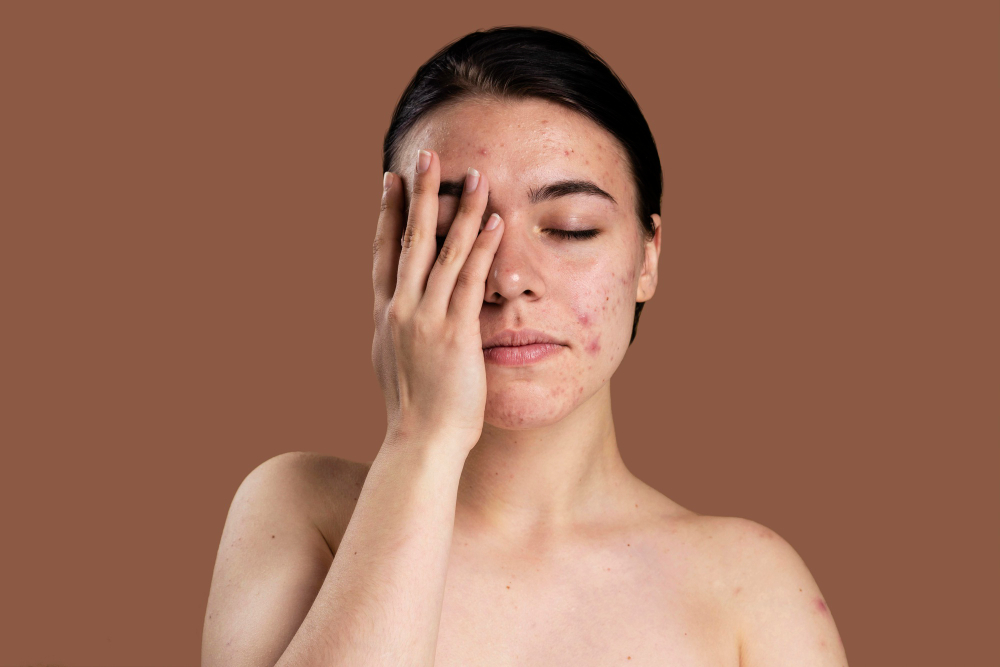
If you’re an adult dealing with acne, you’re not alone — and you’re not imagining it. Adult acne is one of the fastest-growing categories of dermatology patients, and the old narrative that acne is something you grow out of by your twenties is simply wrong for a significant and growing portion of the population.
Studies estimate that acne affects approximately 15% of adult women and 5% of adult men — and the numbers are rising. Many adults experience their first significant acne breakouts in their 30s, 40s, or even 50s. Others carry acne from adolescence into adulthood without ever achieving clear skin. Either way, adult acne requires a different approach than teenage acne — and it responds very well to the right treatment when managed by a board-certified dermatologist.
This post explains why adult acne happens, what makes it different from teenage acne, and what treatments are most effective for clearing it for good.
Why Adults Get Acne
Acne develops when hair follicles become clogged with oil (sebum), dead skin cells, and bacteria — primarily Cutibacterium acnes. The result is inflammation that produces the familiar spectrum of whiteheads, blackheads, papules, pustules, nodules, and cysts.
In adults, several factors drive this process differently than in teenagers:
Hormonal fluctuations are the number one driver of adult acne — particularly in women. Androgens (including testosterone and DHEA) stimulate sebaceous glands to produce more oil. These fluctuations are especially pronounced around the menstrual cycle, during perimenopause and menopause, during and after pregnancy, and in women with polycystic ovary syndrome (PCOS). Adult hormonal acne has a very characteristic pattern: inflammatory papules and cysts concentrated along the jawline, chin, and lower cheeks — areas rich in androgen-responsive sebaceous glands.
Stress drives acne through multiple pathways. The stress hormone cortisol stimulates androgen production, which increases sebum output. Stress also triggers neurogenic inflammation in the skin, worsens the skin barrier, and can change behaviors (sleep disruption, dietary changes, neglected skincare) that contribute to breakouts. Chronic stress — which is extremely common — creates a sustained hormonal environment that perpetuates acne.
Skincare and cosmetic products are a significant and commonly overlooked acne driver in adults. Many moisturizers, sunscreens, foundations, and hair products contain comedogenic ingredients — oils, silicones, and emollients that clog pores. Adult skin, which is often drier and more sensitive than teenage skin, may need more moisturizing products — but choosing the wrong ones can contribute directly to breakouts. This is an area where guidance from a dermatologist or medical esthetician makes a meaningful difference.
Diet — specifically high glycemic index foods and dairy — has a growing evidence base as an acne contributor. Multiple studies have linked high glycemic load diets (refined carbohydrates, sugars, white bread, sweetened beverages) with increased acne severity through their effects on insulin and IGF-1 signaling, which drives sebum production. Skim milk in particular has been associated with acne in several cohort studies, possibly due to its hormonal content.
Medications can cause or worsen acne in adults. Known culprits include corticosteroids, lithium, certain antidepressants, B vitamins in high doses, and androgenic progestins in some hormonal contraceptives.
How Adult Acne Differs from Teenage Acne
Understanding the differences between adult and teenage acne matters because they require different treatment strategies.
Teenage acne is typically driven primarily by the hormonal surge of puberty, which broadly stimulates sebum production across the entire face — producing widespread comedones, papules, and pustules distributed across the forehead, nose, cheeks, and chin. The skin tends to be oily, and the primary goal is controlling sebum and bacteria.
Adult acne, by contrast, tends to be more inflammatory and more hormonally driven. The distribution is often lower-face dominant (jawline and chin). Adult skin is typically drier and more sensitive than teenage skin, which means that many treatments designed for teenage acne — particularly those emphasizing drying, oil-stripping products — can make adult acne worse by disrupting the skin barrier and paradoxically triggering more oil production and inflammation.
Adult acne is also more likely to leave post-inflammatory hyperpigmentation and scarring, because adult skin heals more slowly and is more susceptible to UV-driven pigment changes. Sun protection — including daily broad-spectrum sunscreen — is a non-negotiable part of adult acne management for this reason.
What Actually Clears Adult Acne
Over-the-counter products are rarely sufficient for moderate to severe adult acne. The concentrations of active ingredients available without a prescription are limited, and the underlying hormonal and inflammatory drivers of adult acne require prescription-level interventions to address effectively. Here is what the evidence supports:
Prescription topical retinoids — tretinoin, adapalene, and tazarotene — normalize skin cell turnover, prevent comedone formation, reduce inflammation, and improve post-acne hyperpigmentation. They are foundational to virtually every adult acne regimen. Retinoids require patience (initial purging for some patients, gradual results over 8 to 12 weeks) and careful introduction, but produce sustained improvement that over-the-counter retinol products simply cannot match.
Topical antibiotics and combination products — clindamycin, dapsone, and combination benzoyl peroxide formulations — target C. acnes and reduce surface inflammation. They are most effective as part of a combination regimen rather than as monotherapy.
Hormonal therapy for women is often the most impactful single intervention for hormonal adult acne. Spironolactone (50 to 150 mg daily) is an anti-androgen that blocks DHT and significantly reduces sebum production — often producing dramatic improvement in jawline and lower-face acne in adult women that hasn’t responded adequately to topical treatments. Low-androgen oral contraceptives (particularly those containing ethinyl estradiol with drospirenone or norgestimate) are also effective for hormonally driven acne.
Oral antibiotics — doxycycline, minocycline, and sarecycline — reduce both bacterial counts and skin inflammation. They are used for moderate to severe inflammatory acne, typically for defined courses of 3 to 6 months rather than indefinitely, to minimize antibiotic resistance.
Isotretinoin remains the most effective treatment available for severe, nodular, or scarring acne — and it is increasingly used for adults with persistent moderate acne that has failed multiple prior treatments. Modern low-dose isotretinoin protocols have significantly reduced the side effect burden while maintaining efficacy. At Dehesa Dermatology, we carefully manage every patient on isotretinoin through the iPLEDGE program with regular monitoring and support.
In-office procedures including professional chemical peels, comedone extractions, cortisone injections for individual cysts, and laser therapy complement medical treatment for specific concerns. Our licensed esthetician team and Dr. Dehesa’s laser capabilities allow us to address the full picture — not just the active acne but also the scarring and discoloration it leaves behind.
Building a Skincare Routine That Doesn’t Make Acne Worse
One of the most valuable things a dermatologist can do for an adult acne patient is review their current skincare routine. Many adults — particularly those who are also trying to address dryness or aging alongside their acne — are inadvertently using products that perpetuate their breakouts.
Key principles for an acne-compatible adult skincare routine include: using a gentle, non-foaming, non-stripping cleanser; choosing oil-free, non-comedogenic moisturizers and sunscreens; avoiding silicone-heavy foundations and pore-clogging primers; checking ingredient lists for known comedogenic culprits (coconut oil, isopropyl myristate, lanolin, and certain algae-derived ingredients); and keeping the routine simple — the more products you use, the more potential irritants and comedogens you introduce.
When to See a Dermatologist for Adult Acne
See a board-certified dermatologist if your acne:
- Is leaving scars or dark marks
- Involves painful nodules or cysts
- Has not responded to 2 to 3 months of consistent over-the-counter treatment
- Is concentrated along the jawline and chin, suggesting a hormonal component
- Is affecting your confidence or quality of life
- Has returned after previous courses of treatment
At Dehesa Dermatology in Clovis, CA, we treat adult acne for patients from Clovis, Fresno, Madera, Selma, Sanger, Reedley, and throughout the Central Valley. Dr. Dehesa is fully bilingual in English and Spanish. Call (559) 951-9000 or visit dehesadermatology.com to schedule your acne consultation.
For more on the current evidence behind adult acne treatments, the American Academy of Dermatology’s adult acne resources and the Journal of the American Academy of Dermatology are authoritative sources for clinically current information.


