
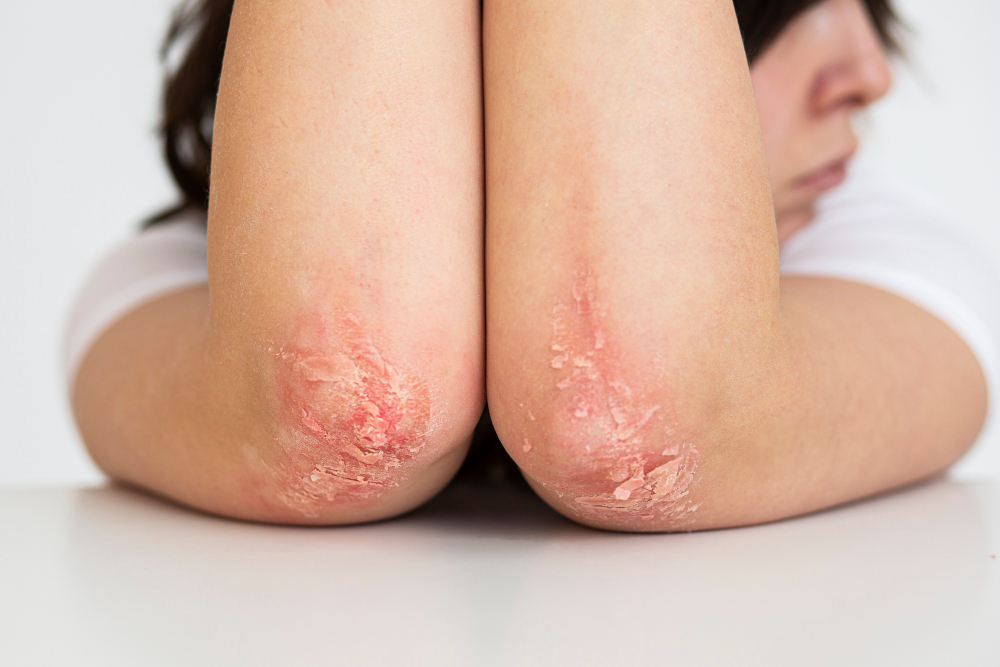
If you’ve been living with moderate to severe psoriasis or eczema, you’ve probably tried topical creams that provide incomplete relief, gone through cycles of oral steroids, and wondered whether there’s something better out there. The answer, for many patients, is yes — and it’s called biologic therapy.
In the past two decades, biologic medications have transformed the treatment landscape for inflammatory skin diseases. Patients who spent years managing constantly flaring, uncomfortable skin with limited improvement are now achieving near-complete or complete clearance and staying clear for years at a time. This post explains what biologics are, how they work, which conditions they treat, and what the process looks like for patients at Dehesa Dermatology in Clovis, CA.
What Is a Biologic Medication?
Biologics are a class of medications derived from living cells — typically engineered proteins that precisely target specific molecules in the immune system responsible for driving inflammation. Unlike conventional systemic medications (such as methotrexate or cyclosporine), which broadly suppress immune function throughout the body, biologics are designed to block a single, specific inflammatory pathway with much greater precision.
This targeted approach means biologics can dramatically reduce inflammation in the skin and joints while leaving most of the immune system’s normal protective functions intact. The result: remarkable efficacy with a generally favorable long-term safety profile that has been established through decades of clinical use in millions of patients worldwide.
Biologics are typically administered by self-injection (subcutaneous injection, similar to an insulin pen) at home on a schedule ranging from every two weeks to every 12 weeks, depending on the medication. Some — such as infliximab — are given intravenously and require administration at a clinical infusion center. At Dehesa Dermatology, our on-site infusion therapy center provides IV biologic administration for patients who require it.
Biologics for Psoriasis
Psoriasis is driven by an overactivated immune system — specifically by the interplay between T-cells, dendritic cells, and inflammatory cytokines including TNF-alpha, IL-17, and IL-23. Modern biologic therapies target these pathways with extraordinary precision.
The major biologic classes currently available for moderate to severe plaque psoriasis include:
TNF-alpha inhibitors — the first biologics approved for psoriasis — include etanercept, adalimumab, and infliximab. They reduce psoriasis symptoms significantly and also treat psoriatic arthritis, making them a preferred option when joint disease is present alongside skin disease.
IL-12/23 inhibitors (ustekinumab) target upstream signaling that drives both the Th1 and Th17 inflammatory pathways, providing durable skin clearance with infrequent dosing — every 12 weeks after the initial doses.
IL-17 inhibitors — secukinumab, ixekizumab, and bimekizumab — target the IL-17 pathway that is now understood to be central to plaque psoriasis pathogenesis. Clinical trials show some of the highest skin clearance rates of any psoriasis medication, with many patients achieving PASI 90 (90% improvement in psoriasis severity) or better.
IL-23 inhibitors — guselkumab, risankizumab, and tildrakizumab — are the newest class and target the p19 subunit of IL-23. They combine excellent efficacy with infrequent dosing (every 8 to 12 weeks for maintenance) and a highly favorable safety profile.
According to the American Academy of Dermatology, biologics are now considered first-line systemic therapy for moderate to severe psoriasis, superseding older systemic agents in most clinical guidelines due to their superior efficacy and safety.
Biologics for Eczema (Atopic Dermatitis)
The biologic revolution has come to eczema as well. For decades, moderate to severe atopic dermatitis had few effective systemic options beyond immunosuppressants with significant side effect profiles. That changed in 2017 with the FDA approval of dupilumab (Dupixent) — and the pace of innovation has accelerated ever since.
Dupilumab (Dupixent) blocks the IL-4 and IL-13 signaling pathways — the central drivers of the Th2 inflammatory response that underlies atopic dermatitis. Clinical trials showed 44% of patients achieving clear or almost-clear skin after 16 weeks, with significant improvements in itch, sleep quality, and quality of life. It is now FDA-approved for atopic dermatitis in patients as young as 6 months old and has accumulated an excellent long-term safety record. It is self-injected subcutaneously every two weeks.
Tralokinumab (Adbry) specifically targets IL-13 and is approved for moderate to severe atopic dermatitis in adults.
Lebrikizumab (Ebglyss) is a newer IL-13 inhibitor with strong clinical trial data and monthly maintenance dosing after initial injections.
Beyond biologics, JAK inhibitors — a newer class of targeted oral medications — have also been approved for moderate to severe atopic dermatitis (upadacitinib and abrocitinib), providing another systemic option for patients who prefer an oral pill over an injection.
Who Qualifies for Biologic Therapy?
Biologics are generally considered for patients with moderate to severe disease — meaning disease that significantly impacts quality of life and has not been adequately controlled with topical therapies and, where appropriate, conventional systemic medications or phototherapy.
The qualification process at Dehesa Dermatology typically involves:
- A thorough clinical evaluation assessing disease severity using validated scoring tools
- A review of prior treatment history to confirm that appropriate prior therapies have been tried
- Pre-biologic laboratory screening including complete blood count, metabolic panel, hepatitis B and C screening, and tuberculosis (TB) testing
- A review of contraindications including active infections, certain malignancies, and other health conditions
- Insurance prior authorization — which our team assists with comprehensively
Most major insurance plans, Medicare, and Medi-Cal cover biologic therapy for psoriasis and atopic dermatitis when prescribed for FDA-approved indications following appropriate prior authorization. Drug manufacturers also offer patient assistance programs for patients with significant cost-sharing burdens.
What to Expect Once You Start a Biologic
Most patients notice meaningful improvement within 4 to 12 weeks of starting a biologic. For psoriasis patients on IL-17 or IL-23 inhibitors, skin can begin clearing visibly within 4 weeks of the first injection, with maximum response typically seen by 16 weeks. For eczema patients on dupilumab, significant itch reduction often precedes visible skin improvement — many patients notice reduced itching within the first two weeks even before their skin fully clears.
Regular follow-up appointments — typically every 3 to 6 months — allow Dr. Dehesa to monitor your response, adjust dosing if needed, conduct required safety monitoring, and renew prescriptions. Some biologics require annual laboratory monitoring; others have minimal monitoring requirements.
The Role of Integrated Care
For patients with psoriatic arthritis — where both skin and joint disease require treatment — the right biologic selection requires input from both a dermatologist and a rheumatologist. At Dehesa Dermatology, our integrated model with on-site rheumatologist Dr. Milena Cavalcante means that patients with psoriatic arthritis receive a unified treatment plan that addresses both dimensions of their disease without requiring coordination between separate offices.
If you’ve been living with moderate to severe psoriasis or eczema and haven’t explored biologic therapy, we encourage you to schedule a consultation at Dehesa Dermatology. The field has moved rapidly in recent years, and the options available today are significantly better than even five years ago. Call (559) 951-9000 or visit dehesadermatology.com to request an appointment.
For additional clinical information on biologic therapies for psoriasis and atopic dermatitis, the National Psoriasis Foundation and the National Eczema Association maintain regularly updated, patient-friendly resources on current treatment options.


